


2026 Hyundai TUCSON vs Honda CR-V Springfield, PA
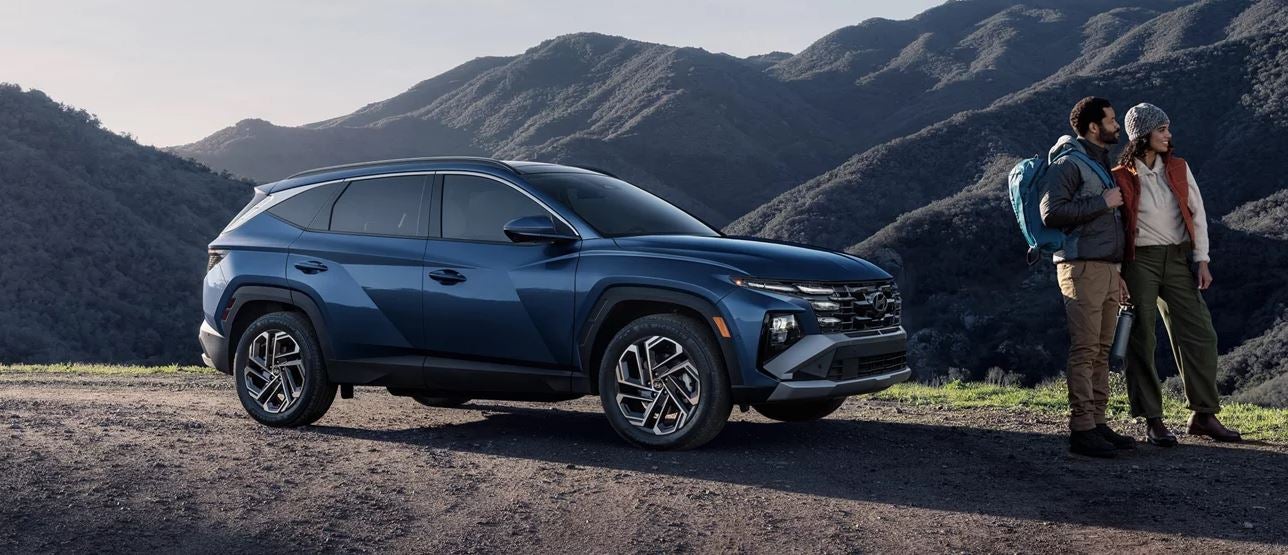 2026 Hyundai TUCSON vs 2026 Honda CR-V in Springfield, PA
Among compact SUVs, the 2026 Hyundai TUCSON stands tall as an iconic and reliable model. It even puts the famous 2026 Honda CR-V to shame, and we at Springfield Hyundai would like to show you how. For more details, continue reading this overview from our dealership team!
Performance
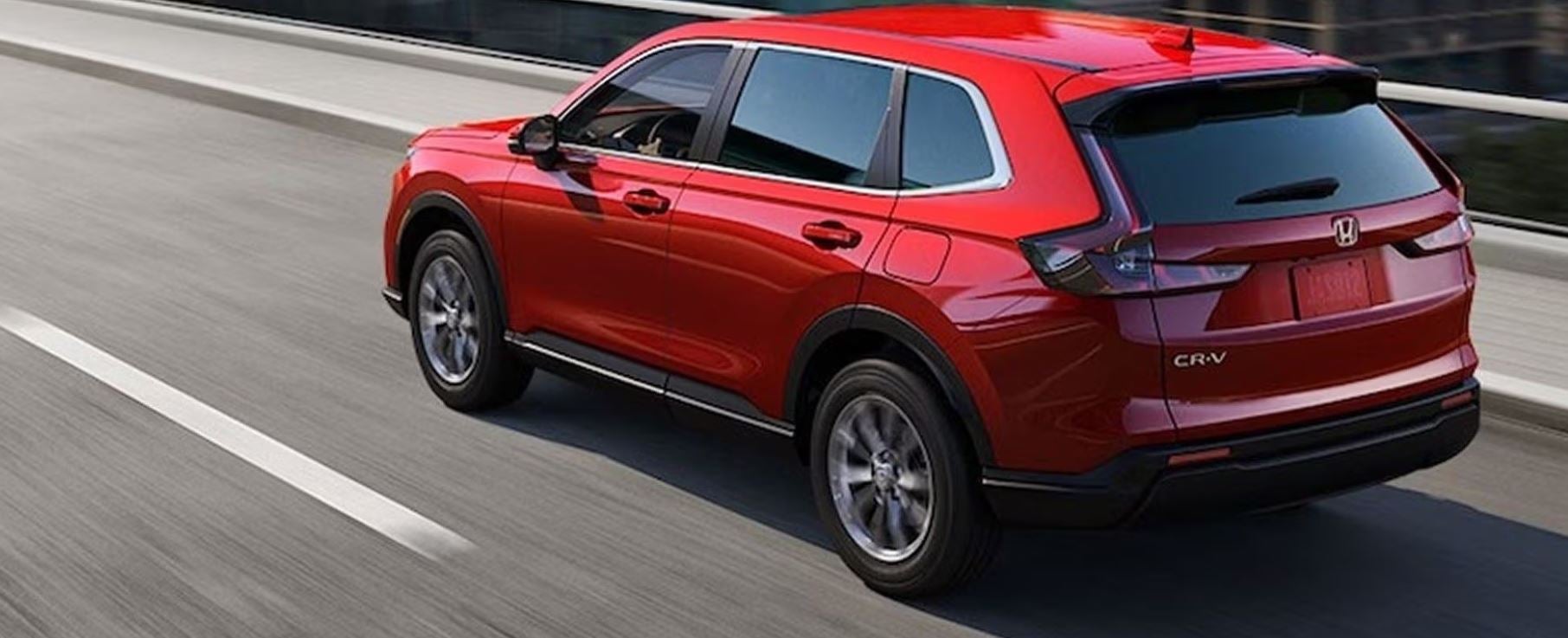
The Hyundai TUCSON is nothing short of adventurous, as this model makes use of a standard 2.5L 4-cylinder engine that produces 187 horsepower and 178 lb.-ft. of torque. Meanwhile, the Honda CR-V has a similar approach with its standard 1.5L turbocharged 4-cylinder powertrain that reaches levels of up to 190 horsepower1 and 179 lb.-ft. of torque2. Both vehicles can be equipped with an available AWD system to secure strong traction on inclement terrain. But if you seek smooth movements too, the standard 8-speed automatic transmission with SHIFTRONIC® on the TUCSON will outperform the CR-V’s standard Continuously Variable Transmission. Moreover, the Hyundai TUCSON has up to four drive modes, while the CR-V caps out at three.
Comfort
The path to relaxation on the 2026 Hyundai TUCSON is more accessible than the Honda CR-V. That’s because the former has optional ventilated front-row seats, while the latter completely lacks this. While they both have available heated front seats, only the TUCSON brings this feature to the rear row. If you would like to rest atop more comfortable seating surfaces, know that both vehicles have an available leather trim for you to take advantage of. You’ll also find a bit more space to stretch on your drives along North State Road in the TUCSON. That’s because it has 108.2 cubic ft. of passenger volume, while the Honda CR-V stops at 106.0 cubic ft. of passenger space.
Technology
In terms of tech, the Honda CR-V has a hard time keeping up with the Hyundai TUCSON. To start, it only has a standard 9.0-inch touchscreen display, while the TUCSON makes use of a standard 12.3-inch iteration. There’s also an available Head-Up Display on the TUCSON, which is something the Honda SUV is completely lacking in. While the CR-V starts out with a standard 4-speaker system, the TUCSON’s standard 6-speaker will outperform it in terms of quality. You can even attain an optional dynamic voice recognition on the TUCSON so that you can deliver commands with your spoken word. This is not possible on the Honda CR-V. Schedule a test drive today so that you can take your John Heinz National Wildlife Refuge visits to new levels with the 2026 Hyundai TUCSON!
Performance
The Hyundai TUCSON is nothing short of adventurous, as this model makes use of a standard 2.5L 4-cylinder engine that produces 187 horsepower and 178 lb.-ft. of torque. Meanwhile, the Honda CR-V has a similar approach with its standard 1.5L turbocharged 4-cylinder powertrain that reaches levels of up to 190 horsepower1 and 179 lb.-ft. of torque2. Both vehicles can be equipped with an available AWD system to secure strong traction on inclement terrain. But if you seek smooth movements too, the standard 8-speed automatic transmission with SHIFTRONIC® on the TUCSON will outperform the CR-V’s standard Continuously Variable Transmission. Moreover, the Hyundai TUCSON has up to four drive modes, while the CR-V caps out at three.
Comfort
The path to relaxation on the 2026 Hyundai TUCSON is more accessible than the Honda CR-V. That’s because the former has optional ventilated front-row seats, while the latter completely lacks this. While they both have available heated front seats, only the TUCSON brings this feature to the rear row. If you would like to rest atop more comfortable seating surfaces, know that both vehicles have an available leather trim for you to take advantage of. You’ll also find a bit more space to stretch on your drives along North State Road in the TUCSON. That’s because it has 108.2 cubic ft. of passenger volume, while the Honda CR-V stops at 106.0 cubic ft. of passenger space.
Technology
In terms of tech, the Honda CR-V has a hard time keeping up with the Hyundai TUCSON. To start, it only has a standard 9.0-inch touchscreen display, while the TUCSON makes use of a standard 12.3-inch iteration. There’s also an available Head-Up Display on the TUCSON, which is something the Honda SUV is completely lacking in. While the CR-V starts out with a standard 4-speaker system, the TUCSON’s standard 6-speaker will outperform it in terms of quality. You can even attain an optional dynamic voice recognition on the TUCSON so that you can deliver commands with your spoken word. This is not possible on the Honda CR-V. Schedule a test drive today so that you can take your John Heinz National Wildlife Refuge visits to new levels with the 2026 Hyundai TUCSON!
1. 190 @ 6000 rpm (SAE net), 145 @ 6100 rpm (SAE net)
2. 179 lb-ft @ 1700-5000 rpm (SAE net), 138 lb-ft @ 4500 rpm (SAE net)

Discounts and/or finance offers may not be combined. For In-Transit inventory, any date of arrival is estimated. The actual date of delivery may vary due to circumstances beyond Hyundai and the dealer’s control. Please contact your local Hyundai dealer for availability details.
More Info
Compare Certified Programs
 Hyundai Certified Used Vehicles
|
 Hyundai Select Used
|
|
|---|---|---|
| Vehicle eligibility | 6 model years old and newer with 80k miles or less |
|
| Vehicle inspection | 173-point inspection | 117-point inspection |
| Limited warranties |
|
|
| If anything happens |
|
|
| Complimentary trials |
|
|
Springfield Hyundai
Address
754 Baltimore Pike
Springfield, PA 19064-3052
Phone
- Sales 877-428-7515
- Service 877-840-0235
| Monday | 9:00AM - 8:00PM |
| Tuesday | 9:00AM - 8:00PM |
| Wednesday | 9:00AM - 8:00PM |
| Thursday | 9:00AM - 8:00PM |
| Friday | 9:00AM - 8:00PM |
| Saturday | 9:00AM - 5:00PM |
| Sunday | Closed |
| Monday | 7:30AM - 6:00PM |
| Tuesday | 7:30AM - 6:00PM |
| Wednesday | 7:30AM - 6:00PM |
| Thursday | 7:30AM - 6:00PM |
| Friday | 7:30AM - 6:00PM |
| Saturday | 8:00AM - 4:00PM |
| Sunday | Closed |
| Monday | 7:30AM - 6:00PM |
| Tuesday | 7:30AM - 6:00PM |
| Wednesday | 7:30AM - 6:00PM |
| Thursday | 7:30AM - 6:00PM |
| Friday | 7:30AM - 6:00PM |
| Saturday | 8:00AM - 4:00PM |
| Sunday | Closed |