


What is Hyundai SmartSense?
What is Hyundai SmartSense? Everything You Need to Know in Springfield, PA
Hyundai is a pillar of automotive safety, and the SmartSense driver-assist features reflect that. These technologies are designed to prevent accidents through a suite of cameras, radar, and sensors. To learn more about the purpose they serve, comb through this detailed overview, then visit Springfield Hyundai to witness their capabilities firsthand.
What Is Hyundai SmartSense?
Hyundai SmartSense is the automaker's umbrella name for its suite of advanced driver-assistance systems. Rather than a single feature, it's a network of cameras, radar units, and ultrasonic sensors working together to help drivers stay aware of their surroundings, avoid collisions, and handle everyday tasks like parking at Longview Park. Hyundai has steadily expanded SmartSense over the past several years, and for 2026 it's more widespread across the lineup than ever, with many core features now standard even on entry-level trims.
How It Works
At a basic level, SmartSense operates in three stages including monitor, alert, and assist. Sensors continuously scan the road, the vehicle's blind spots, and the area immediately around the car. When those sensors detect a potential hazard, the system first warns the driver with a visual or audible alert. If the driver doesn't react in time, many features can intervene automatically, whether that means applying the brakes or nudging the steering wheel back toward center.
Standard Systems
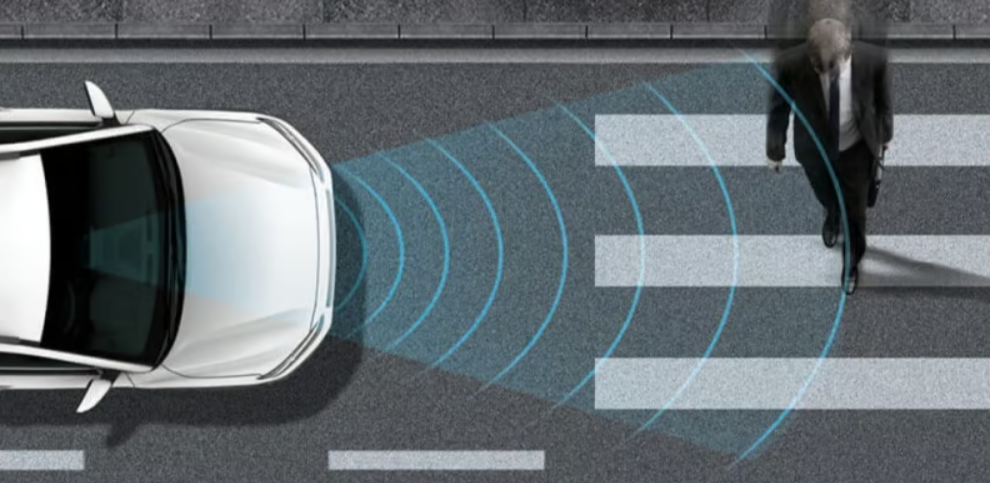
A few features anchor the suite across nearly every 2026 Hyundai. Forward Collision-Avoidance Assist1 uses a front-facing camera and radar to track vehicles, pedestrians, and cyclists ahead of the car. If the system senses an imminent collision and the driver hasn't braked, it can apply emergency braking on its own, and newer versions add junction-turning detection, which can intervene if you start a left turn across an oncoming vehicle's path. Working alongside this system are Lane Keeping Assist2 and Lane Following Assist3, which handle lane discipline on I-676. Lane Keeping Assist2 nudges the car back into its lane if it senses unintentional drifting, while Land Following Assist3 goes a step further, using the front camera to actively help center the vehicle in its lane, even in stop-and-go traffic.
Blind Spot Coverage
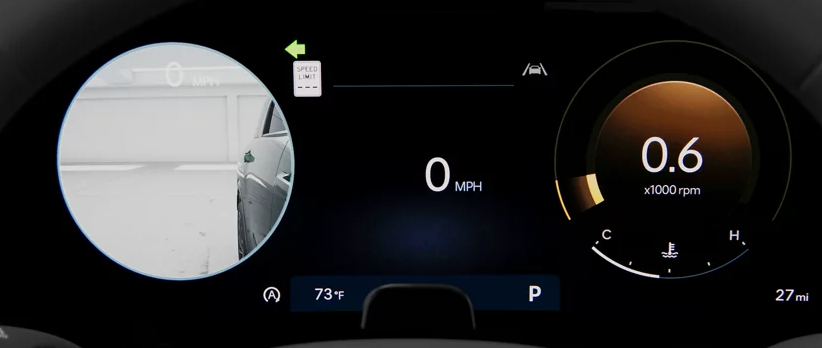
Blind spots and reversing maneuvers get their own dedicated coverage. Blind-Spot Collision-Avoidance Assist4 monitors the areas alongside and behind the car, and can apply corrective braking if you signal a lane change into a lane that's already occupied. Many models pair this with a Blind-Spot View Monitor5 that streams a live camera feed into the gauge cluster whenever the turn signal is engaged. Rear Cross-Traffic Collision-Avoidance Assist6 performs a similar job in reverse, watching for crossing traffic when backing out of a parking space and braking automatically if needed. Rounding out the core package, Driver Attention Warning7 watches for signs of fatigue or distracted driving and prompts the driver to take a break, while Safe Exit Assist8 warns rear passengers about approaching traffic before they open a door.
Available Systems
Higher trims and larger models layer in more sophisticated technology on top of these fundamentals. Highway Driving Assist9 manages lane centering and distance-keeping on the freeway, and its successor, Highway Driving Assist 210, builds on that by adding assisted lane changes when conditions allow. For tight maneuvering, a Surround View Monitor11 stitches together multiple camera feeds into a 360-degree overhead view, while Remote Smart Parking Assist12 lets the car pull in or out of a tight space entirely on its own while the driver stands outside operating it with the key fob. Families also benefit from Advanced Rear Occupant Alert13, which uses overhead sensors to check for movement in the back seat after the car has been locked and can send a phone alert through Hyundai's Bluelink app if it detects something.
Which 2026 Models Have SmartSense?
For 2026, Hyundai has made the core SmartSense package standard equipment across essentially its entire US lineup, from the compact ELANTRA sedan up through the three-row PALISADE SUV. Models confirmed to include SmartSense technology for 2026 include the ELANTRA and ELANTRA Hybrid, the SONATA and SONATA Hybrid, the KONA, the TUCSON and TUCSON Hybrid, the SANTA FE and SANTA FE Hybrid, the PALISADE, and the IONIQ 5. The KONA stands out in particular, since Hyundai includes the full SmartSense suite as standard equipment on every trim, from the base SE all the way up to the top-tier Limited, a factor that helped it earn the IIHS TOP SAFETY PICK+14 designation for 2026.
Trim Levels
Exactly which advanced features are included still depends on trim level. Base trims typically get the core collision-avoidance and lane-keeping features, while mid- and top-tier trims unlock extras. Shoppers who want a specific feature, should confirm availability on the exact trim they're considering, since these tend to be reserved for higher-end configurations even though the base safety suite is now standard nearly everywhere in Hyundai's 2026 range. To see these features firsthand, schedule a test drive of your favorite model at our location in Springfield!
What Are the Advantages of Hyundai SmartSense?-
Standard driver-assist technologies
-
Collision avoidance
-
Highway driving assistance
-
Advanced radar, cameras, and sensors
1. The Forward Collision-Avoidance Assist with Pedestrian Detection (FCA-Ped) is intended to be a supplement to safe driving practices. The system is not designed to detect certain stationary objects such as trees or poles, and may not detect all vehicles or pedestrians under certain conditions. The system is a driver assistance system and is not a substitute for safe driving. The driver is responsible for being attentive and maintaining control of the vehicle, and should not wait for the system's alerts before braking as there may not be sufficient time to brake safely. See Owner’s Manual for further details and limitations.
2. Lane Keeping Assist (LKA) will not work under all circumstances. It operates above 40 mph and only when it is able to detect painted lane markings. It cannot function if the lane markings cannot be seen clearly. If the lines cannot be seen clearly due to poor road conditions, weather, or lighting conditions, it may not function. It also may not function on very rough roads, when walls, curbs or concrete barriers are close by, or if following another car too closely. Since it "sees" the lane markings using a camera in the upper windshield area, it is imperative this area be clear and free of blockage such as stickers, dirt, snow, tinting material, markings and labels. Lane Keeping Assist is not a substitute for safe driving practices, but is a supplemental assist only. The driver is responsible for always maintaining command and control of the vehicle and must keep hands on the wheel at all times. See Owner's Manual for further details and limitations.
3. Lane Following Assist (LFA) helps keep the vehicle centered in its lane only when the lane markings are clearly visible on the road. Lane Following Assist will not work under all circumstances and will not prevent loss of control. Lane Following Assist is a supplemental assist, and does not replace the need for extreme care and attention by the driver. See Owner's Manual for feature details and limitations.
4. Blind-Spot Collision-Avoidance Assist (BCA) helps the driver by warning of other cars in the blind spot region and can apply braking to help prevent an unsafe lane change. It senses the rear side territory of the vehicle when it is traveling over 40 mph. There are limitations to the function, range, detection and clarity of the system. It will not detect all vehicles or objects in the blind spot. Its operation depends on the size, distance, angle and relative speed difference between your car and other cars. BCA may not operate if sensors are obscured in any way. Do not rely exclusively on BCA. BCA is a supplemental system and the driver must still be attentive and exercise caution when driving. It is important to always signal, look over your shoulder and through your mirrors before changing lanes. It is the driver’s responsibility to be aware of the surroundings and ensure it is clear before changing lanes or directions. See Owner’s Manual for further details and limitations.
5. Blind-Spot View Monitor (BVM) assists driver in changing lanes by providing a live view of the blind spots on either side of the vehicle and an audible alert if another vehicle is detected. Turn signal must be activated and other system limitations apply. Do not rely exclusively on BVM. It is the driver's responsibility to be aware of the surroundings and ensure it is clear before changing lanes or directions. See Owner's Manual for further details and limitations.
6. Rear Cross-Traffic Collision-Avoidance Assist (RCCA) can alert the driver of a potential hazard by providing an audible warning and applying light braking. RCCA is active when the vehicle is in reverse and operating at low speeds. Never rely exclusively on RCCA. RCCA cannot prevent all collisions and may not provide alerts or braking in all conditions. Always look over your shoulder and use your mirrors to confirm rear clearance. There are limitations to the function, detection, range and clarity of the system. See Owner's Manual for further details and limitations.
7. Driver Attention Warning (DAW) is only a warning to inform the driver of a potential lack of driver attention or drowsiness. It does not detect and provide an alert in every situation. It is the driver's responsibility to remain alert at all times. See Owner’s Manual for further details and limitations.
8. When the vehicle is parked, Safe Exit Assist (SEA) can alert the driver when a vehicle is approaching from behind. When Child Locks are active, SEA prevents initial disabling of the child safety locks if a vehicle approaching from behind is detected. SEA is not a substitute for driver or passenger attentiveness. Always be aware of your surroundings and attentive of approaching vehicles. See Owner's Manual for further details and limitations.
9. Highway Driving Assist (HDA), when used in conjunction with Lane Following Assist and Smart Cruise Control, is for highway use only and can help keep the vehicle centered in its lane while maintaining a safe distance from the vehicle ahead only when the lane markings are clearly visible on the road and should not be used in poor weather, heavy or varying traffic, or on winding or slippery roads. HDA will not work under all circumstances and will not prevent loss of control. Driver remains responsible to slow or stop the vehicle to avoid a collision. See Owner’s Manual for further details and limitations.
10. Highway Driving Assist 2 (HDA), when used in conjunction with Lane Following Assist, Lane Change Assist, Cut-in Assist, and Smart Cruise Control, is for highway use only and can help keep the vehicle centered in its lane while maintaining a safe distance from the vehicle ahead only when the lane markings are clearly visible on the road and should not be used in poor weather, heavy or varying traffic, or on winding or slippery roads. HDA will not work under all circumstances and will not prevent loss of control. Driver remains responsible to slow or stop the vehicle to avoid a collision. See Owner’s Manual for further details and limitations.
11. Surround View Monitor (SVM) is a parking support system. SVM cannot completely eliminate blind spots, may not detect every object and does not warn of moving objects. Always check surroundings before moving vehicle. See Owner's Manual for further details and limitations.
12 .Remote Smart Parking Assist (RSPA) can remotely help park the vehicle. However, several factors can impact RSPA performance. RSPA may not function correctly if one or more of the parking sensors is damaged, dirty or covered or if weather conditions (heavy rain, snow or fog) interfere with sensor operation. Always inspect the parking area with your own eyes. See Owner's Manual for further details and limitations.
13. Upon turning the engine off, Rear Occupant Alert will provide a visual alert on the instrument cluster. Rear Occupant Alert is not a substitute for driver attentiveness. Never leave a child or pet unattended in a vehicle. See Owner's Manual for further details and limitations.
14. To qualify for 2025 IIHS TOP SAFETY PICK, a vehicle must earn good ratings in the small overlap front and updated side tests and an acceptable rating in the updated moderate overlap front test. It also must earn an acceptable or good rating for pedestrian front crash prevention and come with standard acceptable- or good-rated headlights.
Springfield Hyundai
Address
754 Baltimore Pike
Springfield, PA 19064-3052
Phone
- Sales 877-428-7515
- Service 877-840-0235
| Monday | 9:00AM - 8:00PM |
| Tuesday | 9:00AM - 8:00PM |
| Wednesday | 9:00AM - 8:00PM |
| Thursday | 9:00AM - 8:00PM |
| Friday | 9:00AM - 8:00PM |
| Saturday | 9:00AM - 5:00PM |
| Sunday | Closed |
| Monday | 7:30AM - 6:00PM |
| Tuesday | 7:30AM - 6:00PM |
| Wednesday | 7:30AM - 6:00PM |
| Thursday | 7:30AM - 6:00PM |
| Friday | 7:30AM - 6:00PM |
| Saturday | 8:00AM - 4:00PM |
| Sunday | Closed |
| Monday | 7:30AM - 6:00PM |
| Tuesday | 7:30AM - 6:00PM |
| Wednesday | 7:30AM - 6:00PM |
| Thursday | 7:30AM - 6:00PM |
| Friday | 7:30AM - 6:00PM |
| Saturday | 8:00AM - 4:00PM |
| Sunday | Closed |